
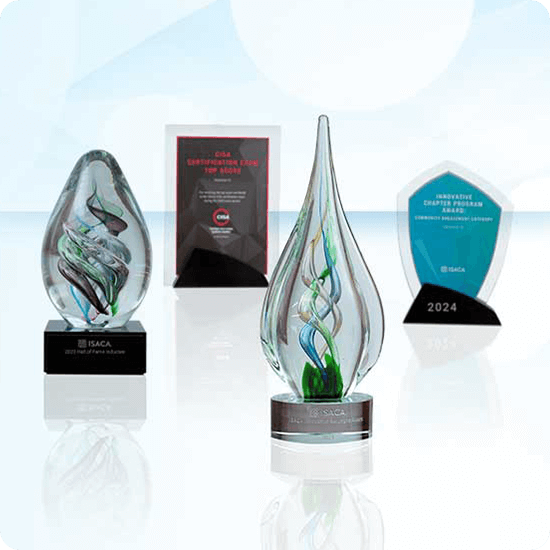


Editor’s note: J. Efrim Boritz, PhD, FCPA, CISA, is the recipient of this year’s ISACA Educational Excellence Award for leadership and contributions in the promotion of research and education in the field of audit and assurance of IT. Find out more about Efrim in this Q&A with ISACA Now below, and learn more about ISACA’s Global Achievement Awards here.
ISACA Now: What does winning the Educational Excellence Award mean to you personally and professionally?
Winning the Educational Excellence Award was an indication of the profession’s appreciation of my education and research initiatives. It validated the efforts I made by volunteering on various professional committees over the years and the education-oriented and research output that I produced. I value ISACA’s appreciation of my academic and practice-oriented activities because contributing to the assurance profession (broadly defined) through education and research was the main reason I became an academic in the first place.
ISACA Now: What have been one or two of your favorite educational experiences so far?
In the early years of my educational activities, I focused on computer-assisted auditing, which is the forerunner of data analytics. This focus led to my early involvement with AI and development of decision aids for internal audit and external audit practitioners. During these years I interacted intensively with practitioners and produced software and educational materials to advance the use of computer-assisted audit techniques. This also led to me being asked to help teach students and practitioners around the globe, which was extremely enjoyable and rewarding.
I also worked on developing IT control guidelines, which ultimately led to the development of assurance services such as SOC 2. I enjoyed collaborating with practitioners in developing guidelines and training materials in this area and building opportunities for practitioners to expand the boundaries of their professional practices.
I also helped develop IT competency guidelines for IFAC’s education committee. These guidelines recognized the importance of IT competencies for professional accountants and the need to expand accounting curriculums to incorporate IS/IT knowledge and skill components that would enhance career opportunities for graduates of accounting programs.
ISACA Now: With more than 40 years of experience in teaching and many years of mentorship, what is the biggest lesson your students have taught you?
I learned that students appreciate developing job-relevant skills, especially ones that help them get onto rewarding career paths. When I started out in academia this was not always appreciated by academics who focused primarily on theory with little attention to the implementation considerations of theoretical ideas. I found that students thrive in programs that combine theory and practice with a healthy focus on “know how” rather than “know what.”
ISACA Now: What inspired you to become an educator?
Encouraged by an uncle who was an accountant, I started out teaching a night course in finance to earn some extra money and found that students appreciated my teaching. Many of the students were new immigrants or mature students looking for new career opportunities. I felt I was helping them transition to a new way of life and to potentially rewarding career paths. It was a very satisfying feeling and led me to more and more teaching in the evenings while working in the audit profession in the daytime. While at work, I saw new technologies coming into practice such as microcomputers, statistical tools and data mining software that the practitioners around me were not ready for. The thought that I could make a difference to the profession through research into emerging technologies and related educational initiatives ultimately led me to pursue doctoral studies, and the rest is history.
ISACA Now: What does being part of the ISACA community mean to you?
The ISACA community has helped my academic career by involving me in committees working on a common body of knowledge, developing IT control guidelines and exploring other topics such as IT governance, security and privacy. ISACA has supported my research studies and contributed to the research and education center at the University of Waterloo (UWCISA). This center organizes conferences, workshops and research aimed at expanding practitioners’ competencies, attracting students to the profession and developing new practice areas. Over the years, I enjoyed the camaraderie and support of many ISACA members. ISACA’s international membership and global outlook have been especially significant to me as they identified new ways to enhance education and research.
