




For years, organizations in highly regulated industries such as healthcare and manufacturing have focused heavily on data integrity. The goal has been straightforward: ensure that data is accurate, complete and trustworthy.
But what happens when the data remains accurate, yet operations come to a standstill?
Recent cyber incidents have shown that organizations can successfully protect data from unauthorized modification or disclosure and still suffer significant operational disruption. In today’s interconnected environments, data integrity alone is no longer enough. Organizations must shift their focus toward data resilience.
The Problem with Traditional Thinking
Many organizations implement data loss prevention (DLP) primarily as a compliance requirement. DLP tools are often configured to monitor emails, block unauthorized file transfers and detect sensitive information leaving the organization.
These capabilities are important, but they address only part of the risk.
Consider a ransomware attack. An organization may be able to demonstrate that no sensitive information was exfiltrated and that data integrity controls functioned correctly. Yet if critical systems and backups become inaccessible, operations can grind to a halt for days or even weeks.
In that scenario, the organization remained compliant – but it was not resilient.
Data Resilience Changes the Conversation
Data resilience goes beyond protecting information from loss or unauthorized disclosure. It focuses on ensuring that critical data remains:
- Accurate
- Available
- Recoverable
- Usable during disruptions
This broader perspective recognizes that cyber threats, system failures, cloud misconfigurations and third-party outages can all affect an organization’s ability to operate.
The question is no longer, “Can we prevent data leakage?”
Instead, leaders should ask, “Can we continue operating if our data environment is disrupted?”
Five Practical Steps to Improve Data Resilience
Organizations looking to strengthen their resilience posture can start with these practical actions:
1. Classify what matters most. Not all data carries the same level of risk. Identify and classify critical assets such as patient records, manufacturing configurations, laboratory results, intellectual property and production data. Understanding what matters most helps prioritize protection and recovery efforts.
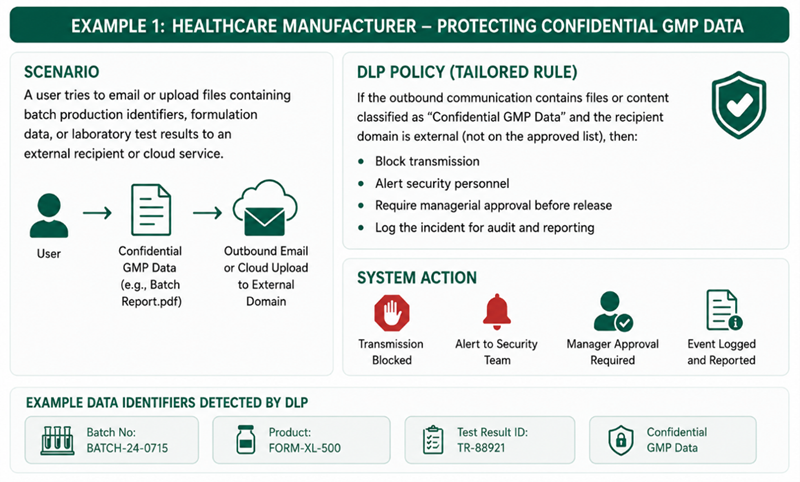
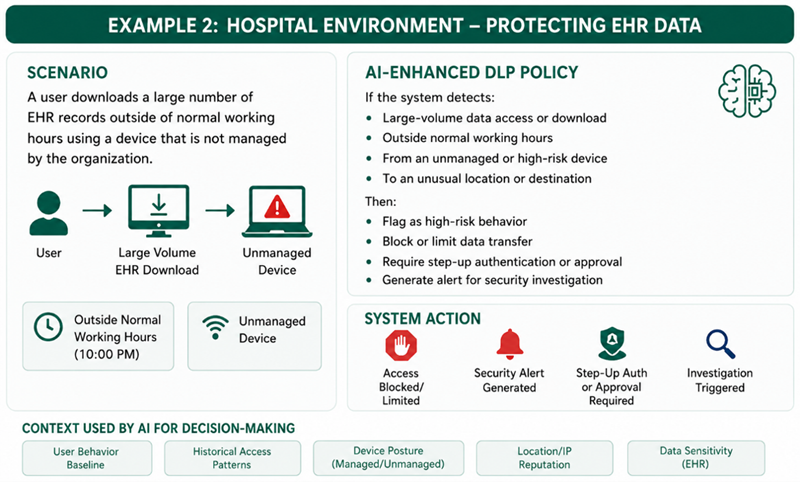
2. Make DLP context-aware. Traditional DLP solutions often rely on pattern matching and predefined rules. Enhance effectiveness by incorporating business context, user behavior and operational workflows. Context-aware monitoring, as illustrated in the examples below, can significantly improve the detection of abnormal activity and reduce false positives.
3. Strengthen recovery capabilities. A surprising number of organizations focus heavily on prevention while overlooking recovery.
Ask yourself:
- Are backups immutable?
- Are recovery environments segmented from production systems?
- Has restoration testing been performed recently?
Resilience depends on the ability to recover quickly, not simply on preventing incidents.
4. Integrate DLP with broader security controls. DLP should not operate in isolation.
Integrate DLP with:
- Identity and access management (IAM)
- Security information and event management (SIEM)
- Zero trust initiatives
- Incident response processes
This integration transforms DLP from a passive monitoring tool into an active component of enterprise cyber defense.
5. Evaluate third-party risk. Data resilience extends beyond organizational boundaries. Cloud providers, contractors and technology partners often process or store critical information. Organizations should establish clear contractual expectations for security, recovery testing and resilience reporting.
The Human Factor Still Matters
Technology alone cannot create resilience.
A resilience-oriented culture requires executive sponsorship, cross-functional collaboration and role-based training. Employees should understand how data protection supports operational continuity, not just regulatory compliance.
When people recognize the connection between data security and business outcomes, organizations become better prepared to respond to disruption.
Moving From Compliance to Resilience
As digital ecosystems continue to expand, organizations need to rethink how they approach data protection. Compliance remains important, but it should be viewed as the starting point rather than the destination.
Organizations that embed resilience into their governance, security architecture and operational processes will be better positioned to withstand cyberattacks, system failures and emerging threats.
The future of data protection is not simply preserving data integrity. It is ensuring that critical data remains trusted, available and recoverable when it matters most.
