



Editor’s note: “Notes from the Boardroom” is a series of blog posts from ISACA board directors providing transparency, context and perspective on how the ISACA board is carrying out its governance responsibilities. In this installment, ISACA Board Chair John De Santis explores how the Board views the changing technology landscape for ISACA’s professional community.
In a world being swarmed by misinformation and gaslighting, with bad actors leveraging artificial intelligence and other tools to undermine our information systems – indeed, to undermine the truth – how can the ISACA community lead the fight to ensure the trustworthiness of the technology and processes embedded within every business, organization and government agency?
This is a big-picture question that is top-of-mind for the ISACA Global Board of Directors. There’s no denying we are in a volatile era – not only for organizations but for all professionals in the digital trust workforce. Make no mistake, trust in our institutions, trust in our processes, trust in the data that teaches a large language model or a chatbot how to come up with answers, the trust that is the very glue that holds us together and allows us to make good decisions, is under attack. As the primary professionals responsible for seeking the truth and speaking truth, ISACA members must lead the way.
As we move forward in this new era, while the purpose of what we do remains the same, job roles and responsibilities will be disappearing or changing rapidly in line with the new tools, processes and capabilities being implemented within enterprises, government agencies and organizations of all types. For example, look at how the recently separate silos of security, software development and operations rapidly merged into Sec/Dev/Ops roles as the software development and deployment cycles accelerated. 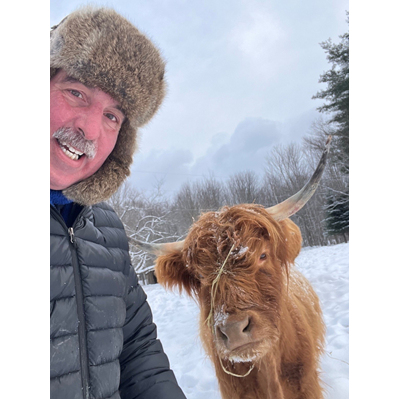
This is the challenge of any profession, of any guild, that has survived hundreds or even thousands of years of technology transitions: how does one balance staying true to purpose, while learning new tasks and taking advantage of the latest advances in tools, techniques and technologies?
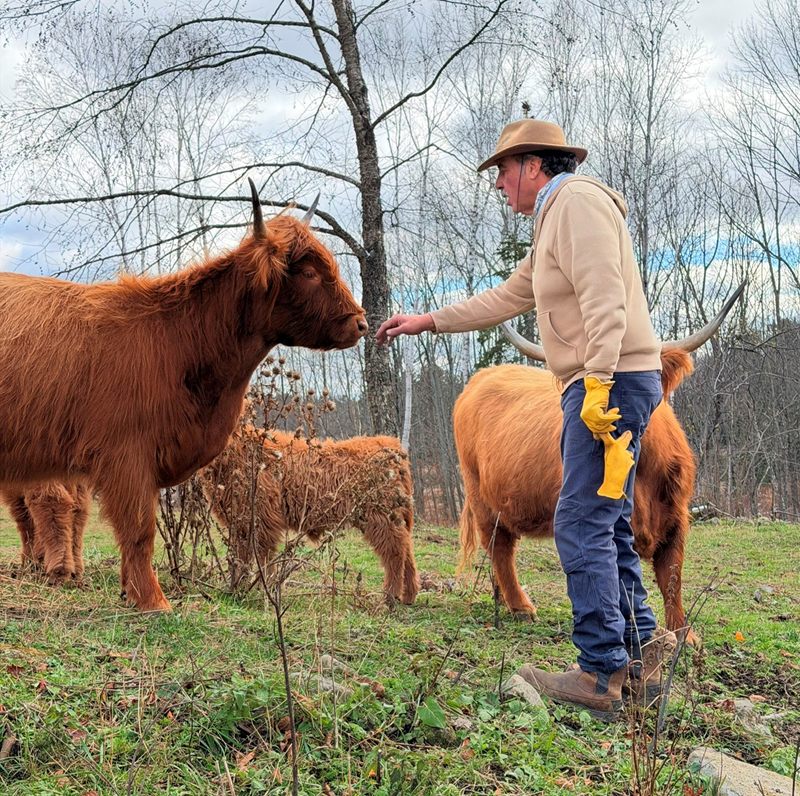
I have some recent personal experience in striking this balance. In the past couple of years, my main job role and responsibilities changed quite radically. I went from being deep in this fight as a technology company CEO for cybersecurity solutions in Silicon Valley to retiring to Vermont, a small, mostly rural US state. However, being somewhat restless, I used this hiatus to start raising beef cattle – specifically, Scottish Highland cows (you know, those “fluffy cows” that dominate calendars and posters).
My family in Italy were ranchers from time immemorial, and I felt a tug to pursue this activity deep inside me. At first, I thought this was going to be a bucolic and graceful transition to a quiet and less technology-focused activity. After all, taking a long view, it was only a few years ago that my grandfather and his father and grandfathers, relied on manual observation for managing herds and grazing patterns.
Three years into my side hustle as a cowboy and I come to discover that while my purpose has remained the same, the tasks of a rancher are VERY different: I am now using GPS-enabled collars on my cows to enable precise tracking of their movements, determine when they might be coming into heat or ready to calve, optimizing their grazing patterns and keeping them out of sensitive wetlands.
Additionally, cellular networks and smartphone apps offer platforms for data management, enabling me to receive timely updates on herd movements, grazing conditions and weather forecasts through mobile devices. Not only that, I use drones to fly over my far pastures to check on pasture conditions and monitor the herd, doing the work that once would have taken far more eyes and ears to accomplish.
Technology allows me to refine these strategies further by forecasting pregnancies, pasture growth rates, potential power grid disruptions and optimal grazing periods. And most importantly, when one of my mama cows wanders off into the woods to have a calf, I know exactly where she is so I can check on how she’s doing without adding to her stress. Together, these technologies have overhauled ranching with more predictable, data-infused methodology. The rancher that does not adapt and adopt the new tools will lose to competition, lose money and eventually lose the ranch.
Why am I going into such detail about cattle? Well, it’s to demonstrate in concrete terms what it means to stay true to purpose, while the tasks that one performs day to day change dramatically.
My purpose, indeed my childhood goal of being a cowboy, has always stayed the same. To paraphrase a great line from the TV series Yellowstone, “A cowboy looks at his cattle and says: I see a life I got to feed and defend, until it grows up and feeds me and my neighbors.” That’s my purpose. And while my purpose has not wavered, my tasks – as a cowboy, what I do day to day – that’s what has changed.
A similar, technology-driven revolution is coming to those of us responsible for audit, security, privacy, governance, risk and compliance. While our purpose in our current roles may not change much, our tasks certainly will. In particular, we are seeing how layering in AI expertise is becoming essential for professionals to advance their careers or even retain their current roles, which is why ISACA has recently put forward advanced AI credentials covering audit, information security, and risk, as well as other learning resources to ensure our community can lead this evolution of our professions. This rapid cycle of change will only accelerate, and those who don’t stay current and familiar with emerging technologies – and their related risks – will quickly become obsolete and replaceable.
If you define your current job/career solely by your tasks and responsibilities, you are at high risk of losing it or being consolidated into other roles. However, this sharpened emphasis on purpose over tasks should bode well for ISACA professionals. My wife was an HR specialist, and she taught me that the more your job was defined by specific tasks and responsibilities, the lower you were rated and compensated. The more your role was defined by purpose and strategic intent, the opposite was true.
In the digital trust roles we all fill today, the amount of time one spends doing one’s job (“But I work such long and hard hours!”), does not make one more valuable – unless you’re billing a client as a consultant – and that only can hold for as long as the client finds your time valuable. True advancement will come by spending as much time “working in the business” as “working on the business” – constantly thinking about how “purpose” could be better achieved by leveraging new tools and capabilities.
ISACA members do not have to navigate this new era alone. In addition to the credentialing and resources ISACA is creating, we have each other. The ISACA community can help each other stay ahead of these shifts by anticipating change, framing the changes for our management, perhaps even shaping these changes. ISACA’s Engage online community, as well as in-person chapter events and global ISACA conferences, present prime opportunities for the knowledge-sharing and exchange of ideas that are more critical than ever.
The collective knowledge of the ISACA community can empower you to confidently implement best practices at your organization while helping others to advance their knowledge and careers. No matter what new constructs evolve, we must be ready and well-equipped to address them and to continue to add value as we accelerate into this new world.
Through commitment to your organization’s mission, balanced with commitment to your profession – your own guild – which helps you remain technically current, you can and will lead effectively in this new exciting and transformative era.