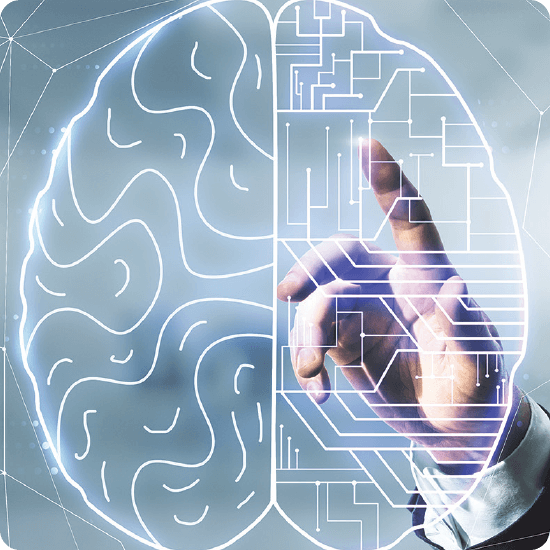
Technology has undergone radical change in the last few decades due to emerging trends in artificial intelligence (AI). The integration of AI has solved many challenges in sectors such as healthcare, finance, and entertainment, but it has also created new areas of risk. This new technological landscape means that AI-enabled cyberthreats have become more complex and sophisticated. The synergy of AI and cybersecurity is a new frontier in cyberspace, especially with the use of machine learning (ML) algorithms, neural networks, and high-level data processing to penetrate systems.
At the same time, AI-generated cyberattacks are becoming increasingly similar to human cognitive and neurological systems. By leveraging the principles of how the brain learns, retrieves information, and adapts, AI systems are now capable of autonomous decision making and independent learning, giving them the potential to be extremely dangerous. Neuroscience is an essential part of the effort to understand these AI systems and how they operate in cyberwarfare. Insights can be gained by observing the similarities between the structure of the human brain and the learning function of AI. By understanding the brain’s capacity for learning and adaptation through experience, organizations can refine AI models based on a neuro feedback mechanism, fostering an environment where AI systems evolve and improve over time. Training AI on diverse datasets that reflect human decision-making patterns can improve its effectiveness, enabling organizations to mimic these cognitive processes.
There is a need to cultivate a culture that encourages experimentation and tolerates failure by embracing errors, resulting in a safe space where teams can test and improve initiatives.
AI takes this manipulation to a new level by using ML to analyze human reactions, learn cognitive shortcuts, and exploit biases more effectively.Introduction to AI-Driven Cyberattacks
AI-driven cyberattacks use ML and neural networks to discover and analyze a system’s potential vulnerabilities, estimate the outcome of an attack, and exploit discovered weaknesses, enabling hackers to expand their activities in previously unimaginable ways. AI models are capable of scanning extensive amounts of data, far exceeding what a human could process, and thus can easily identify exploitable patterns within system structures, user relations, and traffic.1 Some key AI-driven cyberattacks include:
- Automated phishing attacks—Using AI, attackers can generate fake emails and messages to conduct automated phishing attacks that are contextually appropriate and personally tailored. Traditional phishing schemes involve sending fake emails that usually adopt a common format and can easily be flagged by users. In contrast, AI-generated emails are meticulously crafted to imitate the messages of the victim’s coworkers or managers, making the fraud nearly undetectable. This is achieved using language patterns, context, and relevant information about the target. While traditional phishing emails often use generic language such as “dear customer,” an automated attack uses the employee’s name and mimics their language using dynamic, customer-specific links crafted using a GPT model.
- Deepfake attacks—AI has been used to facilitate deepfake cyberattacks, which include fake videos and audio clips depicting the likenesses or voices of real persons with a high degree of realism.2 In one real-world example, hackers imitated a CEO’s voice and instructed an employee to transfer money, resulting in a significant loss to the company.3
- AI-powered malware—AI malware can easily avoid detection by security software because it analyzes and adapts to the software’s actions. For example, AI-enabled malware can blend into a system, mimic normal processes, and initiate malicious acts when no antimalware software is observing it.
- Botnet attack—These attacks have been enhanced through the coordination of botnets, a collection of infected computers that are controlled remotely. Self-evolving intelligent botnets, using ML, can study the normal traffic flow in a particular network and launch a distributed denial of service (DDoS) attack that floods the network and renders it useless.
The Neuroscience Connection
Advanced AI technologies mirror the human brain’s cognitive abilities in problem solving and performing tasks. These technologies excel in two key areas: learning/adaptation and decision making.4 Neuroscience inspired the development of systems that emulate the brain’s ability to process information, recognize patterns, and solve problems. This capability allows enterprises to automate their processes, but it also arms cybercriminals with powerful weapons.
Organizations must remain vigilant against malicious actors who exploit AI technologies for their benefit. Neuromorphic computing5 in particular could enable AI systems to conduct attacks that are more efficient, dynamic, and stealthy. Neuromorphic computing attempts to mimic how the human brain operates by implementing the structure and function of a neural network in a physical chip. Traditional computers process information sequentially, while the human brain processes multiple pieces of information simultaneously, allowing for faster and more effective decision making. If neuromorphic computing succeeds in creating hardware that processes information in parallel, mimicking the human brain, it could result in the development of AI systems that are capable of processing big data in real time faster than current AI models. For instance, a neuromorphic AI system can monitor network traffic, identify weaknesses, and attack before normal security measures discover it. The speed of such attacks would make them very difficult to stop, especially if neuromorphic AI systems develop the cognitive intelligence of the brain and become capable of real-time learning.
Another link between AI-driven cyberattacks and neuroscience is the use of behavioral biometrics.6 These behavioral characteristics include typing rhythm, mouse dynamics, and swipe motions on touch-screen devices. Such behaviors are determined by neurology and are as distinct as fingerprints, aiding in the development of a user or customer profile. By observing how individuals interact with their devices, AI can anticipate a user’s next move, enabling hackers to orchestrate more sophisticated attacks. For example, by determining how fast users respond to emails, their browsing habits, or their engagement with specific types of information, AI can replicate users’ behavior and deceive security controls that rely on behavior biometrics for identification. Such systems may recognize individuals based on their typing patterns or mouse movements. If an AI system can mimic these patterns, it can gain access without negotiating traditional password security systems. In the context of behavioral biometrics, AI and neuroscience are closely related, as both rely on an understanding of human behavior. This connection also raises concerns for organizations, as insights from neuroscience can be leveraged by AI to model and predict human behavior, enabling more sophisticated and targeted cyberattacks.
By understanding characteristics of the human brain, such as malleability and iterative learning, cybersecurity researchers can greatly improve the ability to defend against AI attacks.For years, neuroscience researchers have tried to understand the concept of cognitive bias, an identifiable human characteristic that can influence judgment and decision making. Cybercriminals exploit human bias in their social engineering schemes, taking advantage of their targets’ biases to encourage them to make poor security choices such as clicking on a link in a phishing email or disclosing personal details to a hacker. AI takes this manipulation to a new level by using ML to analyze human reactions, learn cognitive shortcuts, and exploit biases more effectively. There are four key cognitive biases:
- Confirmation bias leads individuals to favor information that supports their preexisting beliefs or hypotheses, disregarding or minimizing evidence that contradicts them. This bias often affects how people gather, interpret, and remember information, resulting in skewed perceptions and decision making. The texts a user shares on social networks or sends via email can be analyzed to determine the type of information the target finds credible. Phishing attacks based on this information can then be launched. For example, if a person posts or forwards articles discussing security, an AI-generated email that seems to come from the enterprise’s security department would be very effective.
- Individuals who exhibit authority bias tend to accept instructions from perceived authorities without question. AI can produce fake videos or emails concerning a superior’s desire for an employee to perform actions, such as transferring money or disclosing certain information.
- The recency effect leads individuals to prioritize recent knowledge over older information. For instance, if an organization recently distributed information about a merger, an AI-crafted phishing email can use this information to make the generated message appear more credible.
- Overconfidence bias occurs when individuals mistakenly believe they can easily identify fake messages. This bias occurs especially in those who consider themselves well-versed in cybersecurity. AI-driven attacks can take advantage of a user’s confidence by crafting phishing emails or links that are harder to distinguish from the usual scams for those who consider themselves smart enough not to fall for such tricks.
Defending Against AI-Driven Cyberattacks: Lessons From Neuroscience
As AI-related cyberattacks become more efficient and elaborate, classic defensive techniques are falling short. To increase organizational protection against AI-based cyberattacks, it is prudent to examine neuroscientific concepts that can inform new approaches to cybersecurity.7 One concept, neurophysiology, which studies how the body—specifically the brain—defends itself against a barrage of onslaughts, can provide useful knowledge to build effective countermeasures.
Adaptive Defense Mechanisms: Learning from Neuroplasticity
Neuroplasticity refers to the brain’s ability to reorganize itself through the establishment and growth of new neuronal connections. This malleability is necessary for an organism to learn from its surroundings and cope with changing circumstances. By understanding characteristics of the human brain, such as malleability and iterative learning, cybersecurity researchers can greatly improve the ability to defend against AI attacks. To leverage the principles of neuroplasticity in cybersecurity, organizations can consider
several strategies:
- Behavior-based detection systems—Cybersecurity systems must go beyond the use of static signatures and known patterns of attack and adopt behavior-based detection systems that scan for deviations from normal activity. Just as the brain adapts to new circumstances, this malleability can be incorporated into the detection system.
- Automated response systems—Automated methods that adapt security rules and policies to the current situation can be compared to controlling users’ movements after the process of securing their static location. For example, during an AI-driven attack, advanced layers of cyberdefense can be activated by the system itself, such as modifying firewall rules or altering intrusion detection provisions.
- Iterative learning—Post-attack analysis and learning from previous incidents can improve future defenses. By analyzing the tactics used in past AI-driven attacks, cybersecurity systems can refine their strategies and develop more robust protective measures, mirroring the brain’s ability to strengthen neural pathways through repeated exposure to challenges.
Mimicking the Brain’s Immune System
The brain’s glial cells are vital, as they are responsible for repairing damaged neurons and maintaining overall brain health. This “immune system” within the brain allows the brain to operate at its best and recover from injuries. Applying this concept to cybersecurity means developing systems that continuously watch for, find, and react to threats in the same way as the brain’s immune system. To adopt this approach, organizations can focus on the following:
- Proactive threat monitoring—Cybersecurity systems can implement monitoring methods to look for abnormal behavior in the system, just as the brain’s immune system checks for damage or infection. Advanced AI systems can examine data packets, user behavior, and system anomalies to detect signs of malware.8
- Self-healing systems—Systems that are capable of self-repairing or isolating damaged components can imitate the brain’s process of recovering from injury. For instance, if a network segment is exposed to a cyberattack, the system can automatically confine the breach and restore affected services without human intervention.
- Distributed defense architecture—Much like the brain’s glial cells, a distributed defense architecture plays a vital role in security, protecting various areas of the network from potential attacks. With this technique, even if there is a single point of failure, the entire system will still function properly.
Cognitive Computing: Mirroring Human Thought Processes in Cybersecurity
Cognitive computing involves replicating human thought processes on computers, enabling them to learn, understand, and interact like a human would. This concept draws on neuroscientific principles, particularly those related to cognitive functions
such as learning and decision making, reflecting how the human brain processes information.9 Cognitive computing also strengthens predictive analytics in cybersecurity, empowering systems to predict and avert threats. Some of these predictive analytics include:
- Threat prediction models—Cybersecurity systems can use cognitive computing technologies to create models that anticipate new mechanisms and vectors of attack based on past experience and current developments. Deep learning models in particular provide a mechanism that can predict the emergence of a threat and prevent exploitation by AI-powered attackers. This is done by mimicking the brain’s functions through its neural network structure, which consists of interconnected nodes, and adjusting connections based on data, similar to synaptic plasticity in the brain.
- Contextual understanding—Cognitive systems can enable more refined contextual understanding to distinguish what is normal from what is not. This multifaceted information can diminish noise levels and make threat detection more effective.
- Attack simulations—An AI-driven cybersecurity system can simulate various attack scenarios to ensure that everything from systems and networks to security protocols and response mechanisms works as expected. This approach mirrors how cognitive computing can model and predict outcomes based on different variables, helping enterprises prepare for potential threats and refine their security strategies.
Cognitive Biases and User Training: Leveraging Neuroscientific Insights to Enhance Cybersecurity Awareness and Decision Making
Organizations looking to protect sensitive data and defend against cyberthreats must go beyond purely cognitive-scientific approaches by implementing comprehensive training and awareness programs
for employees.10 Some measures organizations can take include:
- Education programs—Create training programs to address cognitive biases. If users are aware of these biases and understand how human cognitive processes can be abused, they will be better prepared to recognize and avoid being the victims of advanced AI-driven attacks.
- Simulated phishing attacks—Run simulated phishing attacks to evaluate users’ responses to different types of phishing schemes. If users can practice identifying and responding to potential threats in a safe environment, their ability to make rational decisions during stressful scenarios will be strengthened.
- Behavior feedback—Provide users with feedback on their behavior and decisions, helping them learn from their mistakes and improve their security practices. This approach mirrors the brain’s learning process, reinforcing positive behavior and discouraging behavior that leads to security breaches.
- Memory retention techniques—Implementing techniques such as chunking and mnemonics helps employees remember security protocols more effectively. Chunking breaks down complex information into manageable parts, while mnemonics create associations that enhance recall mechanisms.
- Cognitive load management—Training employees to manage cognitive overload by recognizing signs of overwhelm can help prevent decision fatigue and improve focus and response in stressful situations.
Conclusion
The ability to outpace and outsmart increasingly sophisticated adversaries requires continuous learning and adaptation, much like the human brain. The advent of AI-based cyberattacks presents a formidable cybersecurity challenge that mandates a change in defense mechanisms. Traditional security measures are no longer sufficient.11 To defeat this complex and evolving menace, insights from neuroscience can provide a blueprint for what next-generation cybersecurity might look like. The brain’s ability to adapt through neuroplasticity can inform the development of defense systems that adapt and react to new threats second by second. Daily proactive threat monitoring that imitates the brain’s immune system can help discover and prevent threats before they cause irreversible damage. Cognitive computing and predictive analytics can forecast threats, while neuromorphic computing has the potential to transform the landscape. In the future, the battle between AI-driven attackers and defenders will be defined by the latter’s ability to adapt, innovate, and collaborate. By leveraging the lessons from neuroscience and incorporating them into cybersecurity strategies, it is possible to build a more secure digital landscape and better protect against the ever-evolving threats posed by AI-driven cyberattacks.
Endnotes
1 Dixit, P.; Silakari, S.; “Deep Learning Algorithms for Cybersecurity Applications: A Technological and Status Review,” Computer Science Review, vol. 39, 20212 Mohamed, N.; “Current Trends in AI and ML for Cybersecurity: A State-of-the-Art Survey,” Cogent Engineering, vol. 10, iss. 2
3 Damiani, J.; “A Voice Deepfake Was Used to Scam a CEO Out of $243,000,” Forbes, 3 September 2019
4 Kritika; “Neuro-Driven Cybersecurity: Strengthening Digital Defence,” London Journal of Research in Computer Science and Technology, vol. 24, iss. 1, 2024, p. 17-26
5 Zahm, W.; Stern, T.; et al.; “Cyber-Neuro RT: Real-time Neuromorphic Cybersecurity,” Procedia Computer Science, vol. 213, 2022, p. 536-545
6 Gupta, S.; Maple, C.; et al.; “A Survey of Human-Computer Interaction (HCI) & Natural Habits-Based Behavioural Biometric Modalities for User Recognition Schemes,” Pattern Recognition, vol. 139, 2023, ; Bansal, P.; Ouda, A.; “Continuous Authentication in the Digital Age: An Analysis of Reinforcement Learning and Behavioral Biometrics,” Computers, vol. 13, iss. 4, 2024
7 Canham, M.; Sawyer, B.D.; “Neurosecurity: Human Brain Electro-optical Signals as MASINT” American Intelligence Journal, vol. 36, iss. 2, 2019, p. 40-47
8 Tuyishime, E.; Balan, T. C.; et al.; “Enhancing Cloud Security—Proactive Threat Monitoring and Detection Using a Siem-based Approach,” Applied Sciences, vol. 13, iss. 22, 2023
9 Zafar, H.; Randolph, A.; et al.; “Traditional SETA No More: Investigating the Intersection Between Cybersecurity and Cognitive Neuroscience,” Proceedings of the 52nd Hawaii International Conference on System Sciences, 2019
10 Liv, N.; Greenbaum, D.; “Cyberneurosecurity,” in Policy, Identity, and Neurotechnology: The Neuroethics of Brain-Computer Interfaces, p. 233-251, Springer/Nature, 2023; Qawasmeh, S. A.; AlQahtani, A. A. S.; et al.; “Navigating Cybersecurity Training: A Comprehensive Review,” 20 January 2024
11 Berman, D. S.; Buczak, A. L.; et al.; “A Survey of Deep Learning Methods for Cyber Security,” Information, vol. 10, iss. 4, 2019, p. 122
ER. KRITIKA | CC, CEH, DFE
Is an accomplished researcher specializing in the intersection of cybersecurity and neuroscience. She has made significant contributions to the field through peer-reviewed articles, book chapters, and books. Her expertise lies in uncovering new insights and best practices in cybersecurity, particularly through the lens of generative artificial intelligence, neuroeconomics, good governance, neuroethics, and neuro-driven technologies. She has authored two books, more than 10 book chapters, and more than 15 research papers. Currently, she serves as an independent interdisciplinary researcher, book reviewer for IGI Global, and journal reviewer for more than 10 Scopus-indexed journals, and is a member of prominent organizations such as WiCys India Affiliate and the International Association of Engineers (IAENG).