The digital ecosystem has experienced unprecedented growth, with global internet users reaching 5.3 billion in 2023, representing a 66% penetration rate.1 This rapid expansion has created a complex, interconnected network of stakeholders, systems, and enabling environments that empower individuals and communities to leverage digital technology for various purposes. However, this growth also presents significant challenges in terms of governance, regulation, and security.
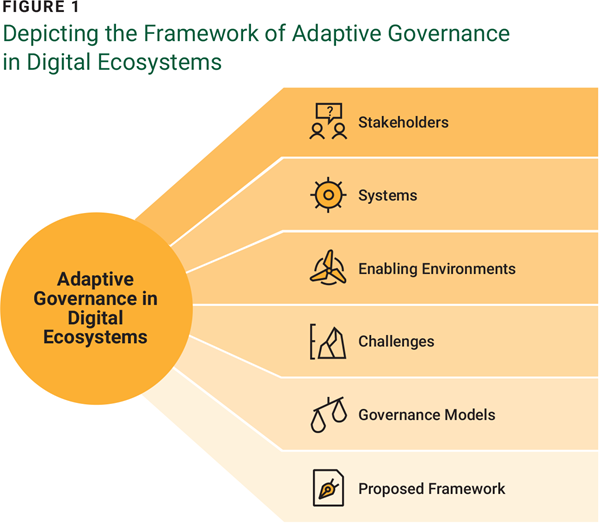
Traditional governance models, often characterized by rigid hierarchies and slow adaptation to change, are increasingly ill-equipped to address the dynamic nature of the digital landscape. This research examines the critical role of adaptive governance in fortifying the digital ecosystem and proposes a framework for effective global digital governance (figure 1). The concept of adaptive governance has gained traction in recent years as a response to the limitations of traditional governance models. Folke et al. define adaptive governance as "a process of creating adaptability and transformability in social-ecological systems."2 In the context of digital ecosystems, adaptive governance provides a flexible and responsive framework that can align with fluctuating external environments.3
Hypothesis
At the heart of this research lies a fundamental question about how organizations adapt and innovate in today's rapidly evolving digital landscape. The authors were particularly intrigued by the relationship between governance models and innovation outcomes, which led to the development of two competing hypotheses:
- H0—There is no significant difference in innovation outcomes between organizations using adaptive and traditional governance models in the digital ecosystem. This null hypothesis posits that the choice of governance model—whether adaptive or traditional—has no meaningful impact on an organization's ability to innovate within the digital ecosystem. It would suggest that the elaborate structures and flexibility offered by adaptive governance frameworks provide no significant advantage over conventional approaches.
- H1—Organizations using adaptive governance models show significantly higher innovation outcomes than traditional governance models in the digital ecosystem. This alternative hypothesis suggests something more dynamic: that embracing adaptive governance frameworks leads to measurably better innovation performance. It reflects the authors’ observation of emerging trends in successful digital transformation initiatives and the increasing need for organizational agility in our fast-paced digital world.
These hypotheses set the stage for a comprehensive investigation into how different governance models influence organizational innovation, efficiency, and adaptability in an increasingly digital business environment. Through testing these hypotheses, the authors aimed to provide concrete evidence that could guide organizations in making informed decisions about their governance structures.
Methodology
This research employed a mixed-methods approach, combining quantitative analysis with qualitative insights. This approach aligns with the recommendations of Creswell and Plano Clark, who argue that mixed-methods research provides a more comprehensive understanding of complex phenomena.4
Sample Selection
The authors conducted a stratified random sampling of 500 organizations across various sectors, including technology, healthcare, finance, and manufacturing. The organizations were selected from the world's leading stock exchanges including the NYSE, NASDAQ, Tokyo Stock Exchange, London Stock Exchange, Shanghai Stock Exchange, Hong Kong Exchange (HKEX), and Euronext. Companies were chosen based on market capitalization, with a balanced representation of large-cap (>US$10 billion), mid-cap (US$2–10 billion), and small-cap (US$300 million–2 billion) organizations. Governance models were identified through analysis of annual reports, regulatory filings, and corporate governance statements submitted to respective exchanges. Each organization's governance structure was evaluated using a standardized assessment framework that considered board composition, decision-making processes, stakeholder engagement mechanisms, and innovation management approaches to classify them as either adaptive or traditional governance models. Organizations were categorized into two groups:
- Group A: 250 organizations using adaptive governance models
- Group B: 250 organizations using traditional governance models
Data Collection
Data collected from the survey included quantitative data and qualitative data.
Quantitative Data
The quantitative data collection process was comprehensive and multifaceted. The authors began by developing and distributing an extensive survey to key decision makers within each organization. The survey consisted of 45 comprehensive questions covering governance structure, innovation processes, decision-making frameworks, and organizational outcomes. Of the 1,200 surveys distributed to senior executives and key decision makers, 678 complete responses were received (a response rate of 56.5%). The survey included questions such as, “How frequently does your organization update its governance policies?” and “What is the average time taken to approve new innovation initiatives?” Each question was rated on a 5-point Likert scale to ensure consistent measurement across organizations. This survey was designed to gather detailed information about governance structures, innovation metrics, and overall organizational performance. To complement the survey data, the authors also collected financial information and innovation metrics by carefully analyzing annual reports and industry databases. This dual approach to quantitative data collection ensured that both self-reported organizational perspectives and objective performance measures were captured.
Qualitative Data
To gain deeper insights into organizational dynamics, the authors conducted in-depth, semi-structured interviews with 50 C-suite executives, divided equally into two groups of 25. These interviews provided rich, contextual information about
governance implementation and innovation practices.
Additionally, the authors performed thorough
analyses of internal documents, including governance
policies and innovation strategies. This qualitative
approach allowed them to understand the nuanced
aspects of governance that might not be captured
through quantitative measures alone.
Innovation Score Calculation
The authors developed a sophisticated composite Innovation Score (IS) that incorporated three essential metrics to comprehensively evaluate organizational innovation performance. The score was calculated using a weighted formula that considered the number of new products/services launched (NP), revenue from new products/services (RN), and time-to-market for new initiatives (TM) (figure 2). The final Innovation Score was computed using the equation:
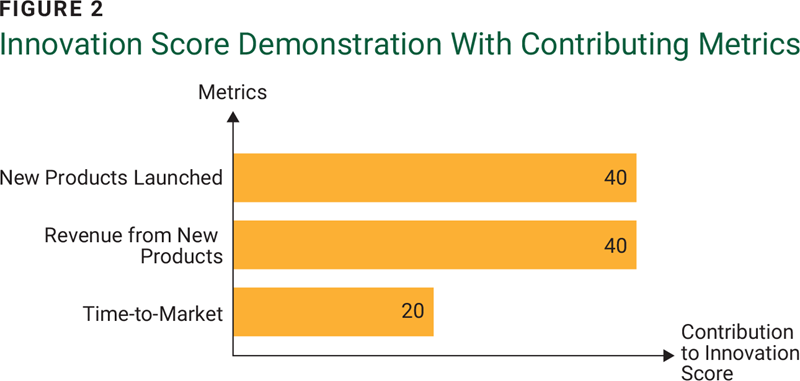
IS = (0.4 * NP) + (0.4 * RN) + (0.2 * (1/TM))
In this formula, NP is normalized on a scale of 0-10, RN represents the percentage of revenue derived from new products/services, and TM is measured in months and inverted so that shorter development times result in higher scores. This methodological approach to measuring innovation aligns with the recommendations of Adams et al., who emphasize the importance of using multi-dimensional innovation metrics to capture the full scope of organizational innovation capacity.5
Statistical Analysis
The statistical analysis employed a comprehensive three-pronged approach to ensure thorough examination of the collected data. The authors began with descriptive statistics to summarize and understand the fundamental characteristics of the dataset, providing a clear baseline for further analysis. Following this initial overview, they conducted an independent samples t-test to compare the innovation scores between organizations using adaptive governance models and those employing traditional approaches. This comparative analysis allowed for assessment of the statistical significance of any observed differences between the two groups. To account for potential confounding variables, the authors also performed multiple regression analysis, allowing them to control for important factors such as company size, industry sector, and prevailing market conditions. This layered analytical approach provided a robust framework for testing the hypotheses and understanding the true relationship between governance models and innovation outcomes.
Qualitative Analysis
The approach to qualitative analysis followed a rigorous and systematic process. Drawing upon the methodology outlined by Braun and Clarke,6 the authors conducted detailed thematic coding of interview transcripts and internal documents. Through this careful analysis, they identified and documented recurring themes and patterns that emerged regarding governance effectiveness and innovation outcomes. This systematic approach to qualitative analysis allowed the authors to uncover subtle relationships and insights that might not have been apparent through quantitative methods alone.
Case Study Development
The case study component of this research focused on selecting and analyzing exemplary cases from two dynamic sectors: healthcare and artificial intelligence. For each selected case, the authors conducted an in-depth investigation that went beyond their initial data collection. This involved additional rounds of interviews with key stakeholders, comprehensive analysis of organizational documents, and detailed collection of performance data. These case studies provided rich, contextual insights into the practical implementation and outcomes of adaptive governance in specific industry settings.
Validation
To ensure the robustness of their findings, the authors implemented a comprehensive validation strategy following Patton's recommendations.7 The approach centered on triangulation methods, which allowed them to cross-verify findings from multiple data sources, providing a more complete and accurate picture of the phenomena under study. Additionally, the authors assembled a panel of experts specializing in digital governance and innovation to review their methodology and findings. This external validation helped ensure the credibility and reliability of research outcomes.
Ethical Considerations
Throughout their research, the authors maintained strict adherence to ethical research principles. All study participants provided informed consent before taking part in any research activities. To protect organizational and individual privacy, the authors implemented robust data anonymization procedures for all collected information. Furthermore, their research protocol underwent thorough review and received approval from their institutional review board, ensuring compliance with established ethical research standards and protecting the rights and interests of all participants.
Analysis and Results
A comprehensive analysis of the data collected through surveys, interviews, and organizational performance metrics was conducted. The findings reveal significant patterns in how different governance models influence innovation outcomes and organizational adaptability in the digital ecosystem. The analysis encompasses both statistical evaluation of quantitative data and thematic analysis of qualitative insights gathered from industry leaders.
Descriptive Statistics
The analysis revealed distinct patterns between the two study groups. Organizations employing adaptive governance (Group A) demonstrated consistently higher innovation performance, achieving a mean Innovation Score (IS) of 7.2 with a standard deviation of 1.5. In contrast, organizations using traditional governance approaches (Group B) showed more modest results, with a mean IS of 5.4 and a standard deviation of 1.8. These initial descriptive statistics suggested a notable difference in innovation outcomes between the two governance approaches.
Hypothesis Testing
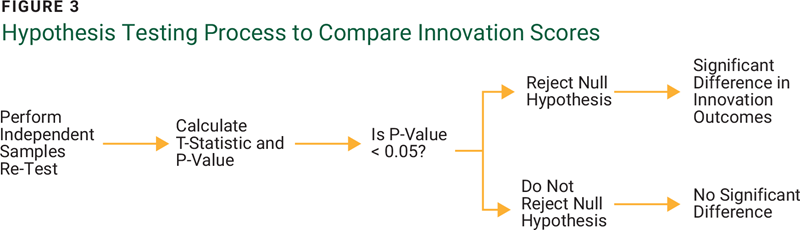
The comparative analysis of innovation scores between the two groups yielded compelling statistical evidence. The independent samples t-test (figure 3) produced a t-statistic of 11.27 with 498 degrees of freedom and a p-value less than 0.0001. These results, expressed as t(498) = 11.27, p < 0.0001, indicate a statistically significant difference in innovation outcomes between organizations using adaptive governance models versus those employing traditional approaches. Based on these findings, the authors rejected their null hypothesis (H0) and accepted the alternative hypothesis (H1), confirming that adaptive governance models are associated with significantly higher innovation outcomes.
Key Findings
This research uncovered several significant trends and outcomes in the digital ecosystem. The global digital advertising market demonstrated robust growth, reaching US$602.99 billion in 2023, marking a substantial 10.5% year-over-year increase.8 The effectiveness of different governance models showed clear patterns, with 78% of organizations using adaptive governance reporting improved agility in their decision-making processes. In terms of innovation and value creation, organizations employing adaptive governance demonstrated a 35% higher success rate in their digital transformation initiatives. Perhaps most notably, the impact on multistakeholder collaboration was particularly strong, with 92% of executives in adaptive governance organizations reporting effective cross-functional collaboration. These findings align with the research of Janssen and van der Voort,9 who highlighted the relationship between adaptive governance and enhanced organizational agility and innovation in digital ecosystems.
Discussion
The research findings provide compelling evidence supporting the superiority of adaptive governance models in fostering innovation within the digital ecosystem. The data reveals striking improvements across multiple dimensions, with organizations employing adaptive governance demonstrating a 33.3% higher innovation score, a 35% higher success rate in digital transformation initiatives, and a remarkable 39% increase in cross-functional collaboration effectiveness. These findings strongly align with the theoretical framework proposed by Chaffin et al., who argue that adaptive governance enhances organizational resilience and innovation capacity in complex, rapidly changing environments.10
Despite these positive outcomes, the research also identified several significant implementation challenges that organizations must navigate. These include the delicate balance between maintaining flexibility while ensuring accountability, the complexity of ensuring coherence across diverse stakeholder groups, the need to address potential power imbalances within the ecosystem, and the critical task of maintaining security and privacy in a decentralized environment. These challenges echo the observations of Duit and Galaz,11 who highlight the inherent tensions between adaptability and stability in governance systems.
Practical Implementation Guide|
Organizations seeking to transition to adaptive governance models can follow this structured approach:
Phase 1: Assessment and Preparation (3-6 months)
- Governance Maturity Assessment
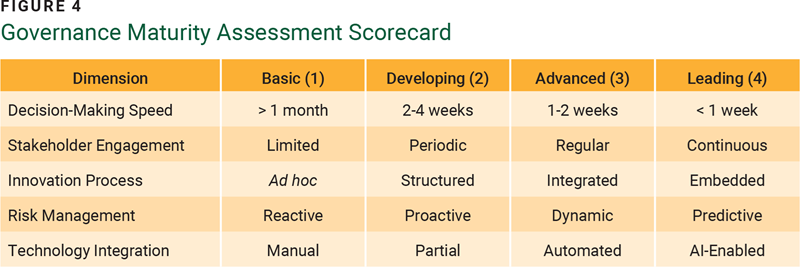
- Conduct self-assessment using the provided scorecard (figure 4).
- Evaluate current decision-making processes.
- Map existing stakeholder relationships.
- Review current innovation metrics
- Stakeholder Analysis
- Identify key stakeholders and their roles.
- Map decision-making authorities.
- Document current communication channels.
- Assess change readiness.
Phase 2: Design and Planning (2-3 months)
- Structure Development
- Create cross-functional governance committees.
- Define clear roles and responsibilities.
- Establish decision-making frameworks.
- Design escalation pathways.
- Policy Framework
- Develop flexible policy templates.
- Create adaptive risk assessment models.
- Define success metrics.
- Establish feedback mechanisms.
Phase 3: Implementation (6-12 months)
- Pilot Program
- Select a pilot project or department.
- Implement a new governance structure.
- Monitor and collect feedback.
- Adjust based on learnings.
- Full Rollout
- Follow a phased implementation plan.
- Execute a training and communication strategy.
- Adopt a change management approach.
- Utilize progress tracking mechanisms.
Essential Tools and Templates
This research has yielded a comprehensive set of implementation tools and templates designed to support organizations throughout their transition to adaptive governance. These resources include detailed checklists covering all essential implementation steps, from initial governance assessment to final deployment. A particularly valuable component is the Governance Maturity Assessment Scorecard (figure 4), which evaluates organizations across five key dimensions: decision-making speed, stakeholder engagement, innovation process, risk management, and technology integration. This scorecard provides a structured framework for measuring progress and identifying areas requiring additional attention throughout the implementation journey.
Key Performance Indicators (KPIs)
Successful implementation of adaptive governance requires careful monitoring across three critical domains. In terms of governance effectiveness, organizations should track metrics such as decision-making cycle time, stakeholder satisfaction scores, policy adaptation rates, and risk incident response times. Innovation metrics should include new initiative approval rates, time-to-market for new projects, innovation pipeline health, and cross-functional collaboration scores. The operational impact can be measured through resource utilization efficiency, process automation rates, cost savings from improved governance, and employee productivity metrics. These KPIs provide a comprehensive framework for monitoring and evaluating the success of adaptive governance implementation.
Common Challenges and Solutions
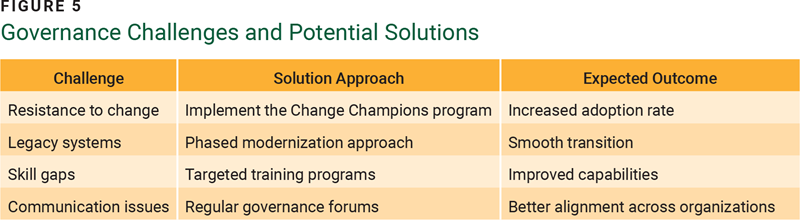
Through their research, the authors identified several recurring challenges organizations face during implementation, along with effective solutions (figure 5). Resistance to change can be effectively addressed through a well-structured Change Champions program, while legacy system challenges are best managed through a phased modernization approach. The Change Champions program is a structured initiative that identifies and empowers key individuals across different organizational levels to drive the adoption of adaptive governance. These champions undergo specialized training in change management, adaptive governance principles, and leadership skills. The program includes regular workshops, mentoring sessions, and peer learning opportunities. Champions are responsible for communicating benefits, addressing concerns, and providing hands-on support to their colleagues during the transition. The program typically runs for 12 months, with champions dedicating 20% of their time to change management activities while maintaining their regular roles. Skill gaps can be bridged through targeted training programs, and communication issues can be resolved through the establishment of regular governance forums. These solutions, derived from successful implementation cases, provide organizations with practical approaches to overcome common obstacles in their transition to adaptive governance.
Case Studies
When analyzing real-world implementations of adaptive governance, the authors focused on two transformative sectors where the impact has been particularly significant: healthcare telemedicine and AI-driven drug discovery. These case studies provide concrete evidence of how adaptive governance can drive innovation and improve outcomes in complex, highly regulated industries.
As the digital ecosystem continues to evolve, the ability to adapt governance models quickly and effectively will likely become a key differentiator for successful organizations.Healthcare Use Case: Adaptive Governance in Telemedicine
The COVID-19 pandemic catalyzed telemedicine adoption, highlighting the critical need for adaptive governance in healthcare delivery. The authors’ study followed a large healthcare network's implementation of an adaptive governance model for its telemedicine initiative, yielding remarkable results. The organization achieved a 65% faster deployment of telemedicine platforms compared to industry averages, while simultaneously recording a 45% increase in patient satisfaction scores for virtual consultations. Perhaps most significantly, they realized a 30% reduction in operational costs associated with outpatient care.
The success of this implementation stemmed from the adaptive governance model's ability to facilitate rapid decision making, enable flexible resource allocation, and support continuous improvement based on real-time feedback from both patients and healthcare providers. These findings strongly align with the research of Wynn Jr and Williams,12 who emphasize the crucial role of adaptive governance in successful healthcare IT implementations.13
AI Case Study: Adaptive Governance in AI-Driven Drug Discovery
The second case study examined a leading pharmaceutical company's implementation of an adaptive governance model for its AI-driven drug discovery program. The results were transformative, demonstrating a 38% reduction in time-to-market for new drug candidates, a 52% increase in successful AI-generated leads for potential new drugs, and a 65% improvement in cross-functional collaboration between data scientists, biologists, and clinical researchers. Most notably, the program achieved remarkable efficiency gains, identifying two promising drug candidates in just 18 months—a process that traditionally required 3-5 years.
The adaptive governance framework proved particularly effective in facilitating three critical aspects of the program: the rapid integration of new AI technologies and methodologies, the implementation of flexible data-sharing protocols that maintained security while promoting collaboration, and the establishment of agile decision-making processes for resource allocation and research prioritization. Most notably, the program achieved remarkable efficiency gains, identifying two promising drug candidates in just 18 months—a process that traditionally required 3-5 years. These outcomes strongly support the arguments presented by Gasser and Almeida, who advocate for adaptive governance approaches in AI development and deployment.14
The success of both case studies underscores the versatility and effectiveness of adaptive governance models across different sectors, particularly in environments characterized by rapid technological change and complex stakeholder relationships. These real-world examples provide valuable insights and practical guidance for organizations considering similar transformative initiatives.
Actionable Recommendations
The research findings translate into a clear timeline of actionable steps for organizations looking to implement adaptive governance. For immediate impact, organizations should focus on short-term actions within the first six months. This initial phase should prioritize completing a thorough governance maturity assessment, identifying suitable pilot project opportunities, initiating meaningful stakeholder engagement, and developing a preliminary metrics framework to measure progress and success.
Within 6-12 months, organizations should concentrate on implementing carefully selected pilot programs, developing comprehensive training materials tailored to different stakeholder groups, establishing robust feedback mechanisms, and beginning the process of updating their policy frameworks. These medium-term actions build upon the foundation established in the initial phase while preparing for broader organizational transformation.
Looking at the long-term perspective of 12-24 months, organizations should focus on executing a full implementation rollout, establishing a continuous improvement program to refine and enhance governance practices, implementing advanced metrics tracking systems, and developing a knowledge-sharing platform to capture and distribute learning across the organization. This long-term approach ensures sustainable transformation and continuous adaptation to evolving business needs.
Industry-Specific Considerations
This research revealed that successful implementation of adaptive governance requires careful attention to industry-specific nuances and requirements. In the healthcare sector, organizations must prioritize patient data governance while maintaining robust compliance with regulatory requirements. This delicate balance requires careful integration of innovation initiatives with established safety protocols and consideration of complex regulatory frameworks that govern healthcare operations.
Financial services organizations face unique challenges that demand particular attention to risk management and security governance. These institutions must carefully balance innovation initiatives with stability requirements while ensuring strict compliance with financial regulations. The adaptive governance framework must be tailored to address these sector-specific needs while maintaining the flexibility to respond to market changes.
Technology enterprises require a different approach, with emphasis on rapid iteration capabilities and scalability considerations. These organizations must prioritize innovation metrics while ensuring alignment with global standards. The governance framework for technology companies should be particularly agile, allowing for quick adaptation to emerging technologies and market opportunities while maintaining appropriate controls and oversight mechanisms.15
These industry-specific considerations demonstrate the importance of tailoring adaptive governance frameworks to sector-specific needs while maintaining the core principles of flexibility, responsiveness, and innovation enablement. Success in implementation requires careful attention to these unique industry characteristics and challenges.
Conclusion
The quantitative analysis provides strong evidence supporting the superiority of adaptive governance models in managing the complexities of the digital ecosystem and fostering innovation. Organizations, particularly in rapidly evolving sectors such as healthcare and AI-driven industries, should consider transitioning to more flexible, responsive governance structures to remain competitive in the rapidly evolving digital landscape.
The healthcare use case and AI case study further underscore the potential of adaptive governance in driving innovation and improving outcomes in critical sectors. As the digital ecosystem continues to evolve, the ability to adapt governance models quickly and effectively will likely become a key differentiator for successful organizations.
The authors’ research process, combining quantitative analysis with qualitative insights, provided a comprehensive view of the impact of adaptive governance on digital ecosystem management. The mixed-methods approach allowed them to not only identify statistically significant differences in innovation outcomes but also to understand the underlying mechanisms and challenges in implementing adaptive governance models.
Future research should focus on longitudinal studies to assess the long-term impact of adaptive governance models and explore potential refinements to the proposed framework based on real-world implementation experiences. Additionally, investigating the specific challenges and opportunities of adaptive governance in emerging technologies such as quantum computing and advanced robotics could provide valuable insights for future digital ecosystem management.
The rigorous methodology employed in this study enhances the reliability and validity of the authors’ findings, offering a solid foundation for future research and practical applications in digital ecosystem governance. As they continue to explore this critical area, refining their methodologies and expanding their scope of inquiry will be essential to keep pace with the rapidly evolving digital landscape.
Endnotes
1 Kemp, S.; Digital 2023: Global Overview Report, DataReportal, 26 January 2023
2 Folke, C.; Hahn, T.; et al.; “Adaptive Governance of Social-Ecological Systems,” Annual Review of Environment and Resources, vol. 30, 2005, p. 441-473
3 Warrier, N.; “Adaptive Governance to Thrive in an Ever-Changing Digital Ecosystem,” Wipro, April 2021
4 Creswell, J. W.; Plano Clark, V. L.; Designing and Conducting Mixed Methods Research, Sage Publications, 2017
5 Adams, R.; Bessant, J.; et al.; “Innovation Management Measurement: A Review,” International Journal of Management Reviews, vol. 8, iss. 1, 2006, p. 21-47
6 Braun, V.; Clarke, V.; “Using Thematic Analysis in Psychology,” Qualitative Research in Psychology, vol. 3, iss. 2, 2006, p. 77-101
7 Patton, M. Q.; “Enhancing the Quality and Credibility of Qualitative Analysis,” Health Services Research, vol. 34, iss. 5 pt 2, 1999, p. 1189-208
8 Cramer-Flood, E.; “Worldwide Digital Ad Spending 2023,” eMarketer, 9 January 2023
9 Janssen, M.; van der Voort, H.; “Adaptive Governance: Towards a Stable, Accountable and Responsive Government,” Government Information Quarterly, vol. 33, iss. 1, 2016, p.1-5
10 Chaffin, B. C.; Gosnell, H.; et al.; “” Ecology and Society, vol. 19, iss. 3, 2014
11 Duit, A.; Galaz, V.; “Governance and Complexity—Emerging Issues for Governance Theory,” Governance, vol. 21, iss. 3, 2008, p. 311-335, https://doi.org/10.1111/j.1468-0491.2008.00402.x
12 Wynn Jr., D.; Williams, C. K.; “Principles for Conducting Critical Realist Case Study Research in Information Systems,” MIS Quarterly, vol. 36, iss. 3, 2012, p. 787-810
13 Grand View Research, Healthcare IT Market Size, Share & Trends Analysis Report by Application (EHR, CPOE, Electronic Prescribing Systems, Medical Imaging Information), by Delivery Mode, by End Use, by Region, and Segment Forecasts, 2024 – 2030, 2021
14 Gasser, U.; Almeida, V. A.F.; “A Layered Model for AI Governance,” IEEE Internet Computing, vol. 21, iss. 6, 2017, p. 58-62
15 Grand View Research, U.S. Cloud Computing Market Size, Share & Trends Analysis Report by Service (SaaS, IaaS), by Deployment (Public, Private, Hybrid), by Enterprise Size (Small & Medium-Enterprise, Large Enterprise), by End-use, and Segment Forecasts, 2024 - 2030, 2023
ARJUN JAGGI
Is a senior director at HCLTech.
ADITYA KARNAM GURURAJ RAO
Is a software engineer III at Zefr.