
Pacemakers have been saving lives since 1958.1 Remarkable devices initially created at the intersection of physical and electrical systems, doctors first implanted them into humans approximately 10 years after the concept of electrical–physical systems gained momentum in the late 1940s.2
Just as this electrical–physical innovation evolved into the digital–physical innovation we know today, the paradigm of digital–physical systems, called cyber–physical systems (CPS) by the International Organization for Standardization (ISO), has evolved significantly.3 CPS continues to push the frontiers of digital innovation, including CPS focused on reducing greenhouse gas (GHG) emissions. However, one cannot assume that these CPS will generate net positive environmental benefits. In reality, the indiscriminate pursuit of these technologies in the interests of GHG reduction can end up doing more environmental harm than good.
There are six dilemmas (or risk factors) for chief information officers (CIOs) to focus on when examining the CPS emissions paradox: GHG emissions, e-waste, heavy water usage, mineral needs, plastics derived from fossil fuels, and largescale production waste. Because digital technologies are not as clean as most believe them to be, actively mitigating this risk helps ensure that the environmental benefits of CPS are fully realized.
Types of CPS and Their Potential Impact on Emissions
ISO defines CPS as systems that “… integrate computational components (information processing) with physical processes, which interact through a network.4 Consider the aforementioned pacemaker (figure 1).
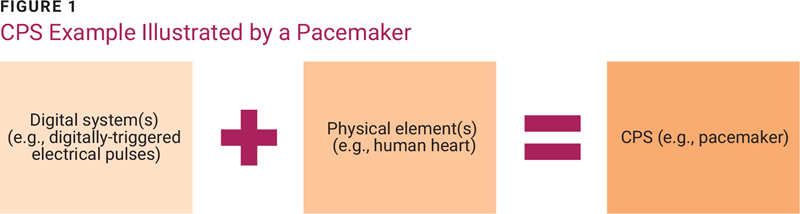
Digital twins—“virtual representations of products, processes, and facilities that enterprises use to design, simulate, and operate their physical counterparts”—are complex examples of CPS in mining and manufacturing.5 Other examples of CPS are autonomous vehicles, machines automating physical infrastructure development at an immense scale (as seen in China), and self-correcting robots connected to the internet.6
One of the benefits of integrating technologies such as Internet of Things (IoT) and machine learning (ML) into CPS is how they help enable efficient energy provision and industrial production, “… thereby optimizing economic feasibility and environmental impact” and ultimately facilitating the decarbonization of energy systems.7
ISO also highlights the potential for unintended consequences of CPS and recommends considering ethics, safety, responsibility, liability, privacy, and other factors in their design and development.8 One source took these unintended consequences a step further, advising that CPS with artificial intelligence (AI) could result in unpredictable and potentially existential risk if not well controlled. 9
There are two specific unintended consequences worth noting—two cases of “unexpected negative emergence” of CPS aimed at GHG emissions reduction.10 These are their impact on energy consumption and GHG emissions and their negative environmental impact before (early in the digital value chain) and after (later in the digital value chain) the actively deployed life of the digital devices. It is interesting that this unexpected negative emergence only became visible because of the growing understanding of the negative impact of digital technology on the environment.
Cyber–Physical–Social Systems
The most sophisticated evolution of CPS is cyber–physical–social systems (CPSS) (figure 2). CPSS integrates “… human knowledge, mental capabilities, and sociocultural elements” with a CPS.11 CPSS extends CPS by integrating human behaviors and habits in the expectation of further enhancing decision-making processes.12 The specific nature of the behaviors and habits could be determined using AI (e.g., ML, deep learning).
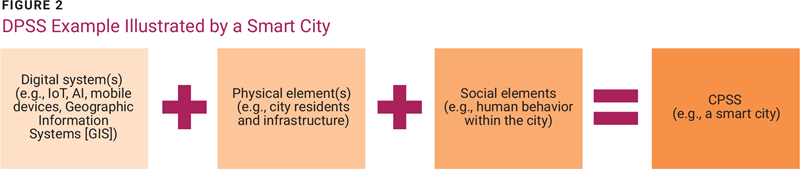
A significant example of a CPSS is a smart city, a system that integrates the city-dwellers’ behavior and other personal information to create the maximum urban utility. CPSS are more complicated than CPS, however. Besides technical issues, there are significant risk factors—namely, privacy concerns—that need to be addressed in smart city CPSS applications. An example is the recent cancellation of a high-profile smart city initiative in Toronto, Ontario, Canada, due to privacy concerns.13 If it were not for the advocacy of the project’s privacy lead and the media coverage it created, the smart city project might have gone ahead to compromise the privacy of all involved.14
Given that “… it is still unclear how to include human rights, fair labor practices, living conditions, health, safety, wellness, diversity, equity, work-life balance, empowerment, [and] community engagement” in CPSS, they have a long way to go to achieve maturity.15 Despite their relative immaturity, in a climate context, CPSS have emerged as a “… powerful framework for tackling the impacts of climate change by integrating digital technologies, physical infrastructure, and societal dynamics.” 16
Smart Grids: CPS for Reducing Emissions
The increase in electricity demand by a growing universe of electrical and electronic devices, such as electric vehicles (EVs), AI, blockchain, and data centers, is driving investments in renewable and even nuclear electrical energy generation at the expense of traditional investments in fossil fuel-generated electricity. The goal of this energy transition paradigm is to reduce emissions compared to coal, oil, and gas-driven power plants.17 To manage the integration of new sources of power and optimize power distribution to a growing volume of endpoints, one specific CPS has come into play in both industrial and residential contexts, including in smart cities: smart grids (figure 3).
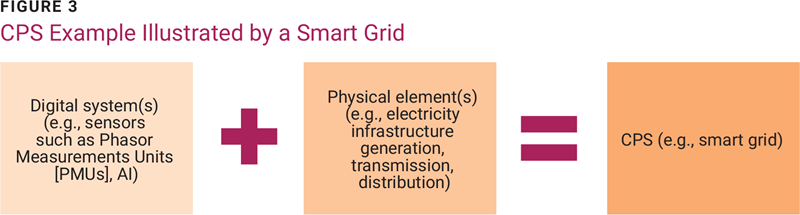
Smart grids are digital technologies for managing electricity supply (including from new, renewable sources) and demand (including by technologies such as EVs, AI, and data centers) in the interests of minimizing grid costs and in the overall stability of the electricity grid.18 Approximately 75% of investments in smart grid technology are in electricity distribution (electricity demand management), for example, by the deployment of sensors and monitoring devices such as smart meters and AI agents in residences and in industry. To make the desired impact, though, smart grid investments “… need to more than double through to 2030.”19
Incidentally, AI agents—also known as agentic AI—need governance in much the same way as any other IT, albeit a more specialized form. Given the risk of AI in CPS, agentic AI’s governance requirements include identifying the accountable parties for agentic AI strategy and AI operations, as well as the operational oversight of functions such as data sourcing (privacy), data processing (transparency), and data distribution (data sharing) to maintain digital trust.
Like CPS, CPSS are becoming part of strategies to reduce GHG emissions, with smart grids being an essential part of these strategies.20 The aspiration is that CPSS will “… enable individuals and communities to access information, share knowledge, and participate in collective decision-making processes related to climate change mitigation and adaptation.”21 CPSS would enable-technology for smart cities, and the data collected would be used by smart grids to optimize energy demand management in such an environment.
The benefits of the application of digital solutions to environmental challenges should outweigh the environmental costs of these technologies.Ultimately, CPS and CPSS are expected to improve the efficiency of industrial, manufacturing, and agricultural processes, resulting in a 4% reduction in global emissions by the end of the decade.22 The AI component is expected to “… further enhance carbon capture, green manufacturing, and sustainability practices, enabling communities to better adapt to climate volatility and minimize environmental impact” in 2025.23
CPS, GHG Emissions, and the Environment
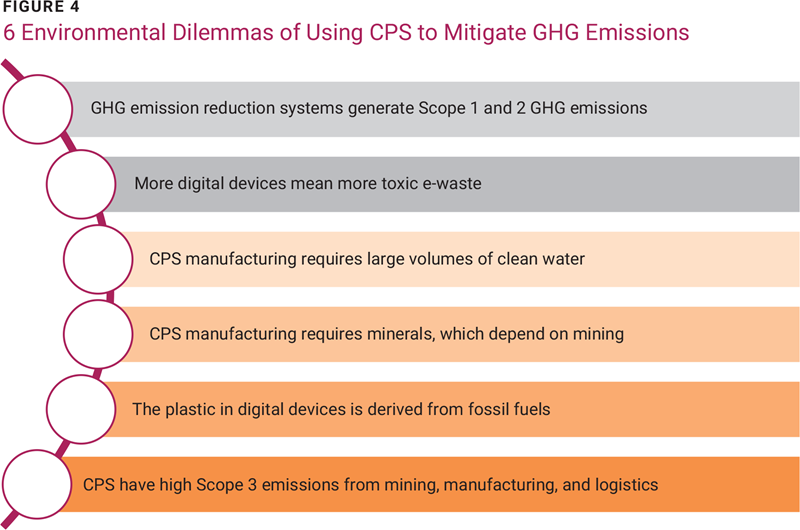
CPS and CPSS are at the leading edge and have significant potential for reducing GHG emissions. However, these systems present a paradox: while they may be deployed to reduce GHG emissions, there are six ways they can increase emissions, resource requirements, and waste (figure 4).
From the GHG Protocol:
- Scope 1 emissions refer to direct energy emissions from an entity’s owned assets.
- Scope 2 emissions refer to indirect emissions from acquired energy.
- Scope 3 emissions refer to energy emissions created along the entire value chain but excluding Scope 1 and Scope 2 emissions.24
The six dilemmas are:
- The growing power demand of an ever-increasing portfolio of digital devices and systems, including CPS and CPSS, which means increased Scope 1 and Scope 2 emissions. This highlights that the proposed emissions reduction benefits of CPS and CPSS are only realized if the emissions generated by the systems are less than the emissions the systems are designed to reduce.
- The increase in toxic e-waste from outdated and redundant digital equipment.25 Such e-waste makes its way into landfills and is even shipped off to other countries.26 In Canada alone, toxic e-waste has tripled over the past 20 years.27
- The increasing resource requirements associated with digital technology. Consider the extensive clean water requirements of semiconductor factories.28 This is a significant ethical concern in a world where a quarter of people do not have access to clean drinking water.29
- The resource requirements for digital technologies. The growing need for resource extraction and processing produces even more GHGs (Scope 3 emissions) and potentially creates environmental despoilation. Precious metals such as gold, silver, lithium, and palladium are essential to building the devices needed for increasingly digital work and lifestyles.30 From an ethical perspective, the irresponsible sourcing of these minerals from mines in countries with poor human rights protections is a concern.
- The requirement for plastic in digital devices, a material derived from fossil fuels. The other challenge with plastic, especially at the disposal end of the digital technology life cycle, is that more than 2,000 species have been negatively affected by plastic waste, and nearly every species of sea bird has ingested plastic.31 Plastic can take between 20 and 500 years to decompose, but it never fully breaks down, only becoming smaller and smaller microplastics that absorb toxins and continue to pollute the environment.32
- The Scope 3 GHG emissions derived from the mining, manufacturing, and transportation involved in the digital value chain. For any organization, Scope 3 emissions are greater than its Scope 1 and Scope 2 emissions combined, and “account for more than 90% of a business’s total GHG emissions.33
Each of these dilemmas will require specialized IT governance and management to ensure that GHGs are truly lower after implementing GHG emission-mitigating technologies such as CPS and CPSS. At a minimum, the GHG impact of CPS and CPSS should be considered during the design phase to help ensure that their contribution to GHGs is minimized. In other words, the costs and benefits of digital technology for emissions and the environment must be carefully weighed. The benefits of the application of digital solutions to environmental challenges should outweigh the environmental costs of these technologies.
In a broad digital context, these dilemmas provide food for thought: Responsible digitalization must be a strategic theme in any digital transformation initiative to help ensure that the environmental impact of digital technology is appropriately considered. It is not outside the realm of possibility that green IT becomes increasingly topical as the negative environmental impact of digital becomes known to a wider audience.
Conclusion
Less than a single lifetime after the first pacemaker helped extend a human life, CPS are evolving to the point where they may one day be key to extending all life on our planet. This benefit comes at a cost, however—an environmental cost originating in at least six dilemmas that need active management to help ensure that costs do not outweigh the benefits.
In IT governance terms, what is at stake is not only ensuring that CPS realize the positive GHG reduction and environmental benefits expected of them, but also that an IT life cycle perspective is taken. This perspective should account for:
- The risk of direct and indirect digital emissions (Scope 1 + Scope 2)
- The upstream and downstream GHG emissions (Scope 3), consisting of the upstream raw material resourcing and manufacturing implications
- The downstream implications of discarded digital equipment and e-waste
Without this due diligence, one will not be able to say with confidence that CPS are aiding sustainability.
Endnotes
1 Aquilina, O.; “ A Brief History of Cardiac Pacing” Images in Paediatric Cardiology, vol. 8, iss. 2, 2006, p. 17-81
2 Krämer, B.J.; “Evolution of Cyber-Physical Systems: A Brief Review,” Applied Cyber Physical Systems, Springer, USA, 2013, p. 1-4
3 International Organization for Standardization, “Cyber-Physical Systems,”
4 International Organization for Standardization, “Cyber-Physical Systems”
5 NVIDIA, “What is a Digital Twin?”
6 Calver, T.; “The Mega-Machines Helping China Link the World,” BBC, 20 July 2018
7 Inderwildi, O.; Zhang, C.; et al.; “The Impact of Intelligent Cyber-Physical Systems on the Decarbonization of Energy,” Energy & Environmental Science, iss. 3, 2020
8 International Organization for Standardization, “Cyber-Physical Systems”
9 Inderwildi; Zhang; “The Impact of Intelligent”
10 Pearce, G.; “Is Detrimental Unexpected IT Emergence Inevitable?,” ISACA® Journal, vol. 2, 2023
11 Semeraro, C.; Dassisti, M.; et al.; “Sustainability Aspects and Impacts in Cyber-Physical Social Systems,” 2021 International Conference on Cyber-physical Social Intelligence, December 2021
12 IEEE, “Cyber-Physical-Social Systems Can Impact a Changing Environment,”
13 Jacobs, K.; “Toronto Wants to Kill the Smart City Forever,” MIT Technology Review, June 2022
14 CBC News, “Not Good Enough': Toronto Privacy Expert Resigns From Sidewalk Labs Over Data Concerns,” CBC, October 2018
15 Semeraro; Dassisti; “Sustainability Aspects and Impacts”
16 IEEE, “Cyber-Physical-Social Systems”
17 United Nations, “Renewable Energy – Powering a Safer Future”
18 International Energy Agency, “Smart Grids”
19 International Energy Agency, “Smart Grids”
20 IEEE, “Cyber-Physical-Social Systems”
21 IEEE, “Cyber-Physical-Social Systems”
22 Dwivedi, Y.K.; Hughes, L.; et al.; “Climate Change and COP26: Are Digital Technologies and Information Management Part of the Problem or the Solution? An Editorial Reflection and Call to Action,” International Journal of Information Management, vol. 63, 2022
23 Liu, C.; “The Future of Technology: Key Trends to Watch in 2025,” Alizila, January 2025
24 ClimatePartner, “The Complete Guide to Understanding Scope 1, 2, and 3 Emissions”
25 Dwivedi; Hughes; “Climate Change and COP26”
26 Wrona, N.; “The 7 Countries Where e-Waste Ends Up,” WasteDive, 28 July 2014
27 Griffin, T.; “Canada's Electronic Waste More Than Tripled in 20 Years, UW Study Indicates,” CBC, May 2023
28 PCL Construction, “Microchip Manufacturing is Booming – and It’s Intersecting With Water Rights and Regulations,” September 2024, World Economic Forum; “The Water Challenge for Semiconductor Manufacturing: What Needs to be Done?,” July 2024
29 Lederer, E.M.; “A Quarter of World Population Lacks Safe Drinking Water: UN,” City News, March 2023
30 Government of Canada, “Responsible Use of Digital Technologies,” February 2024
31 Parker, L.; “The World's Plastic Pollution Crisis, Explained,” National Geographic, 23 September 2024
32 United Nations, “In Images: Plastic Is Forever,” Center for Biological Diversity, “10 Facts About Single-Use Plastic Bags”
33 BDC, “Why Your Supply Chain Choices Are Vital for Reducing Your Business’s Carbon Footprint,” 6 February 2024
Guy Pearce, CGEIT, CDPSE
With an academic background in business, computer science, economics, and the natural and built environments, Pearce has served in senior strategic leadership and governance roles in the private and public sectors. He has led digital transformations involving IT and data for most of his career, excelling in building sustainable enterprise capabilities that enable value creation. An industry thought leader with more than 100 published articles, he was awarded the 2019 ISACA® Michael Cangemi Best Author award for contributions to IT governance.